Mostrando entradas con la etiqueta Experiences in the class Spain. Mostrar todas las entradas

domingo, 25 de febrero de 2018

WORKING ON EMOTIONS IN PRESCHOOL

Since our fisrt year in preschool, at the age of three, we have been working on how to identify and express our emotions. We learn to recognise our own emotions and those in others as well as how to deal with them through stories and through participating in a variety of activities. We not only work on emotions in our class, but our families also colaborate and contribute in many different ways.


Here are some of the activities we have carried out:


  • As a whole group, we listen to stories and we share our experiences explaining the different emotions we feel in different situations.


    • With the story "The Colour Monster" by Anna Llenas,  we help the main character put his emotions into the right place, by classifying them into different colours. Here is Hugo imitating each emotion that comes up in the story.

    • Another story which helps us identify differnt emotions is "Glad Monster, Sad Monster" by Ed Emberley. 


    • We immitate different facial expressions related to each emotion.

    • We identify the expression in the eyes and the mouth acording to each mood.


    martes, 21 de noviembre de 2017


    Feelings and breathing.

    Listening to silence, inhaling and exhaling, being aware of your body are essential moments in the life of a child and the moments he/she spends in the class.
    Self-control and feelings management require a huge personal effort which should begin in the first years of life.
    A specific time has been established in the class in order to develop those skills including a time for relaxing and taking time for themselves (20 minutes per day). The sequence of  the activities is the following:
    -       They inhale and exhale deeply so that they can concentrate and focus on their bodies.
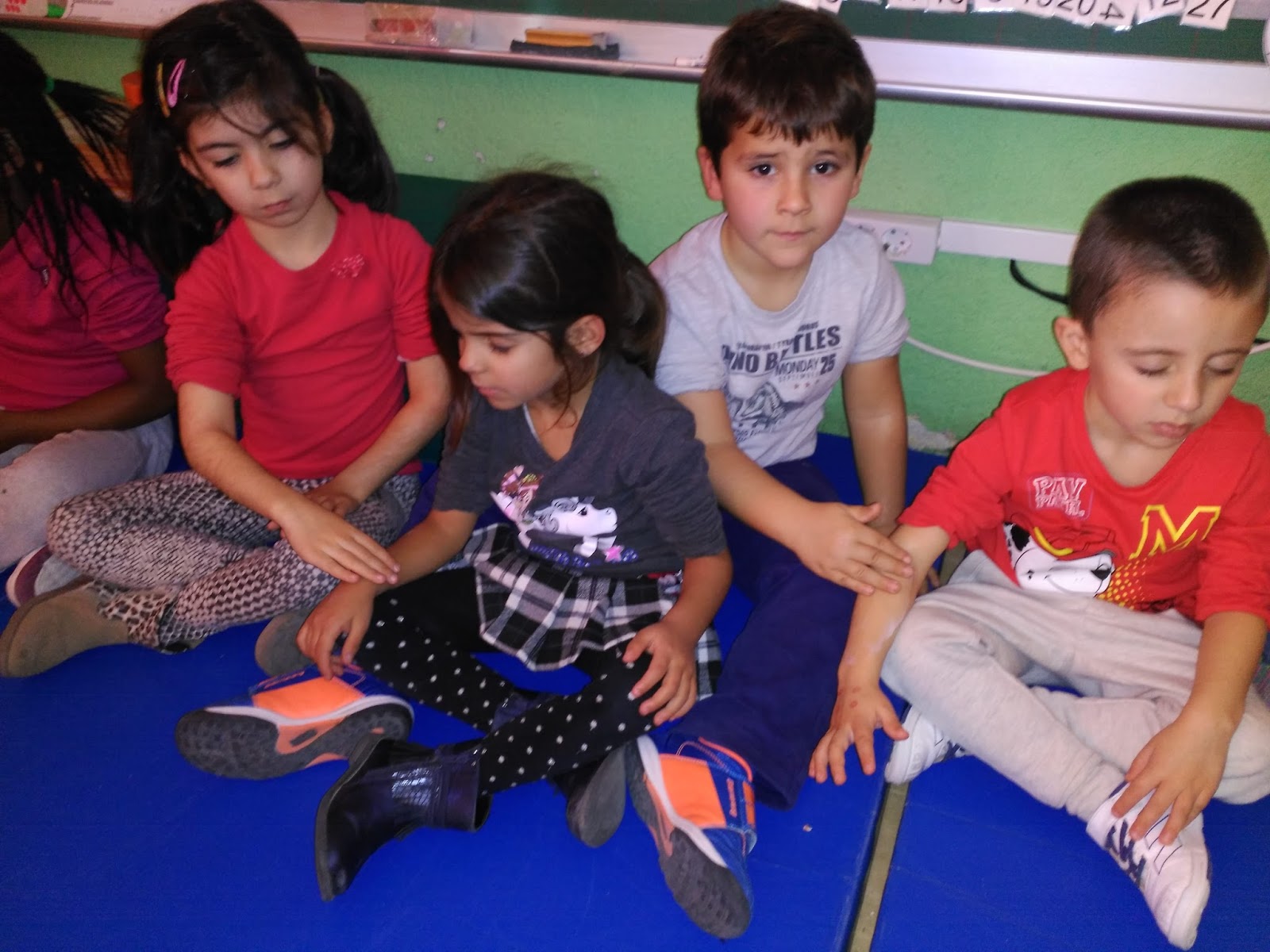
    -       They practise mindfulness techniques in order to improve their concentration and their attention span (hand movements): press the fingers of one hand to the middle of the other palm, massage it in circular motions, ,rotate their wrists, etc.
    -       They do activities to experience how to feel, touch, and transmit emotions to one another: touch to touch, caress, skin-to-skin contact. All of them enhance the child´s strategies to socialize, communicate and understand the others. They also improve their emotional ties and the social relations between children of the same age. We use different materials such as feathers, creams, massage balls, etc.
    During the activities we also use our calm down jars. They provide healthy and effective ways for little ones to help soothe themselves, calm down, take deep breaths and work through emotions. You need the following ingredients for the jar: water, liquid glue, food colouring and fine glitter. Once it has cooled, you put a lid on and secure it with hot glue. When the child shakes the jar, the glitter gently disperses and this relaxation technique not only changes the child´s state of mind, but it also can alter the neuronal connections.


    All these moments working with relaxation, feelings and body contact  help the group cohesion enormously.
    5 años C. CURSO 2017/2018. Beatriz Salas Huete


    miércoles, 5 de julio de 2017

    THOUSANDHUGS.COM


    Pre-school children have in its class a hugs box. This box contains a series of cards with different types of hugs.
    The older college students reinvented this great idea and immortalized it with the Stop Motion technique. Went it great and learned from the little ones to enjoy, relax, and feel loved with something as simple as a hug.
    Since that day they occasionally received hugs of different types in the playground.

    THOUSANDHUGS.COM

    viernes, 2 de junio de 2017

    HOW WE DEAL WITH
    ANGER
    One of the main emotions children are learning to deal with is anger. Anger appears on a regular basis inside and out of the classroom. It is an essential part of being human, but it can be useful and positive or harmful and negative. It is important that children develop an awareness and acceptance of anger and how to express it appropriately. The idea is to gradually help them build self-management, help them recognise how individual actions can affect others' feelings and choose an appropriate way of expressing and dealing with anger rather than seeking adult responsibility. The three steps in dealing with anger are:
    ·        Recognise and accept how they are feeling
    ·        Try to control the feeling
    ·        Show anger in an appropriate way.

    Now all of this sounds easy, but it isn't that simple. In the classroom, we have a calm down box with several options for children to use for step 2 "Control the feeling":


    Children shake, open and choose a random ice cube. Each cube gives an idea of how to cool off (e.g. read a book, draw a picture, take 5 deep breaths, tell a friend...)


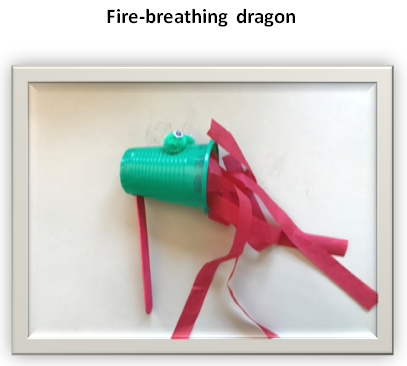
    (students blow through the hole and practice the deep breathing calming technique until the breathing slows and the dragon is calm) by The Elementary School Counselor http://elementaryschoolcounselor.tumblr.com)
    The calm down box is also useful  for managing other emotions such as anxiety or when children are over- excited. All these ideas are easily found on internet.
    When I introduced the box to my students, I let them experiment with the different options so they became familiar with each one.


    jueves, 25 de mayo de 2017

    How I deal with emotions in the year 1 classroom

    Feelings and emotions are essential in our lives and therefore it is important that children learn the vocabulary related to feelings in order to express themselves clearly and to  understand that feelings change and that it is okay to feel different ways.

    The first step in the year 1 classroom is to identify and name emotions and to recognize how these feelings are expressed.

    In Preschool, children had already worked on the basic emotions through a well-known story book "The Colour Monster". I retold the story and seated my class in groups of colored monsters.
    At the beginning of the school year, I introduced some of the basic feelings through stories in Spanish and in collaboration with the Spanish teacher. These books are:


    These books were left in the reading corner and children love to refer back to them in their free time.

    Each week we worked on an emotion and we gradually built a display with the different emotions we had learned about and added more. During the whole year, we are constantly referring back to these emotions every time they appear in any situation on a daily basis.